| Power System Blockset | Search Help Desk |
| PI Section Line | Examples See Also |
Implement a single phase transmission line with lumped parameters
Library
Elements LibraryDescription
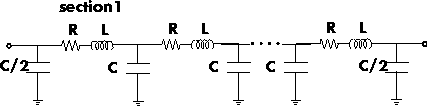
Unlike the distributed parameter line which has an infinite number of states, the pi section linear model has a finite number of states that permit a state-space model to be used to derive its frequency response. The number of sections to be used depends on the frequency range to be represented.
A good approximation of the maximum frequency range represented by the pi line model is given by the following equation: where:
 L(H/km) C(F/km)
Dialog Box
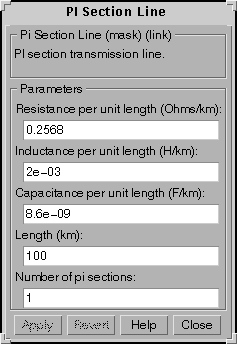
Enter the resistance, inductance, and capacitance per unit length in the first three entries. Enter the line length and the desired number of pi sections in the last two entries.
Example
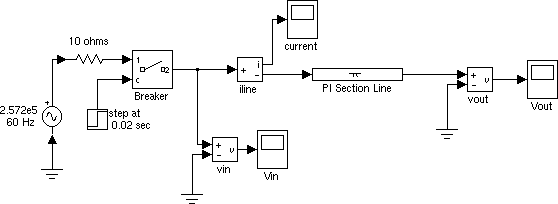
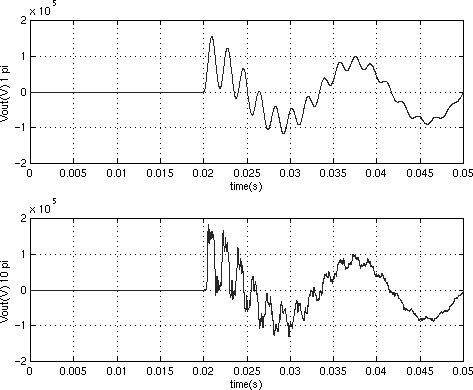
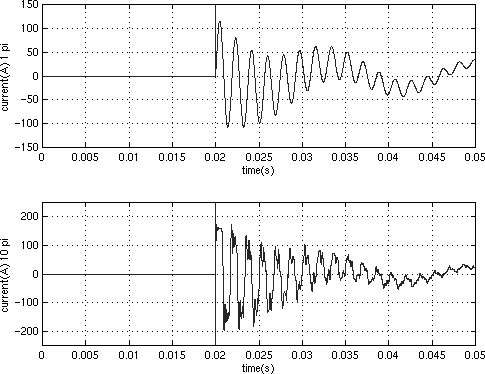
Obtain the line energization voltages and current in the following circuit. This circuit is available in thepsbpiline.mdl file. The results obtained with the line modeled by one pi section of 100km and 10 pi sections of 10km are shown below.
See Also
Distributed Parameter Line