|
The
specific waste management system should be adjusted
by means of carrying out assessment of technical and
economic basis and by means of implementation of waste
management.
Hazardous
waste management strategy in the Republic of Latvia,
1999-2004
|
Specific hazardous waste, for management
of which there is needed management system, includes:
|
| -
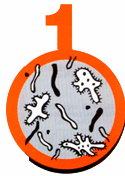
is waste, which contains viable micro-organisms or those toxins
with respect to which it is known, or with respect to which
it is believed that they may cause sickness in human beings
or other living organisms (EU directive 91/689/EC, Annex III).
|
 |
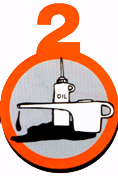
- hydraulic oils and brake liquid waste; engine
oils, gearbox oils, lubricating oils, insulation oils and waste
from other liquids, ship hold oily waste; other oil waste, including
polluted soil. |
|
- once the asbestos- containing products
will be no longer manufactured, the main source of asbestos
will be waste from insulation used in buildings and other objects,
roof covers, as well as decorative materials, which are generated
when buildings are repaired or tore down (EU directive 87/217/EC).
|
|
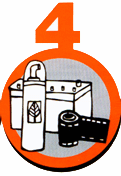
- mercury thermometers,
batteries, lead accumulators, luminescent mercury lamps, organic
solvents, lacquer and paint waste, waste from oil products and
mineral oils, unused medicine, washing, cleaning, polishing
products, plant protection products, photo chemicals, insecticides,
disinfecting products, electric and electronic devices. |
|
- waste generated in slaughterhouses and meatpacking
companies (EU directive 90/667/EC). |
|