 |
| |
| HOUSEHOLD
HAZARDOUS WASTE |
 |
|
 |
| mercury
thermometers and luminescent mercury lamps
contain mercury, which is toxic. When it is being accumulated
in the body, it can affect the functioning of liver and
brains. |
|
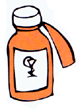
unused
medicine in contact with other waste can form toxic
compounds, which pollute water and air. |
|
|
|
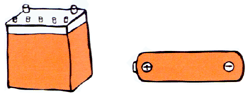
| lead
accumulators and batteries contain heavy metals,
such as lead, cadmium, nickel, mercury, copper, which
accumulate in bones. Lead can cause anaemia, but the most
dangerous for human health of all metals is cadmium, which
accumulates in liver and hair. Batteries are being used
in cassettes, toys, calculators, clocks, cameras, household
devices, etc. |
|
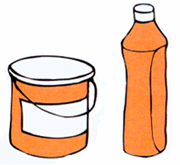
lacquer
paint waste and organic solvents are easily
flammable, contain toxic substances, which can cause allergy
and other diseases. |
|
|
|
|
|
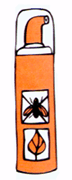
| waste
from plant protection remedies and insecticides
are extremely poisonous, they precipitate in adipose tissues,
can cause formation of malignant tumours and change processes
in a human body. |
|
electric
and electronic devices contain heavy metals,
such as nickel, lead, arsenic, selenium, etc. When they
descend in waste and human body, they can cause changes
in the functioning of certain organs. |
|
burning
of oil waste and mineral oils pollutes groundwater
and air, and they are harmful for human health, causing
allergy and respiratory pipe diseases. |
organic solvents, disinfecting liquids, washing, cleaning,
polishing waste.
|
|
lacquer paint waste and organic solvents are easily
flammable, contain toxic substances, which can cause allergy
and other diseases.
|
|
photo chemicals. |
|
|
Inheritance from the
soviet times
We have inherited the former firing grounds of the Soviet Army
polluted with chemicals, industrial hazardous waste dumps, which
do not comply with the environmental protection requirements,
storage sites of non-owned agricultural chemicals from the former
collective farms and soviet state farms, which were left without
supervision after the collapse of the system.
In the beginning of the 90-ties, while carrying out the inspection
of hazardous waste, it was stated that the greatest threats
to the Latvian nature in the hazardous waste field could be
originated from the agricultural chemicals, which were left
without an owner and were not properly managed after the re-organisation
of the former soviet agricultural system. Mostly, they were
pesticides, which are strong poisons with regard to their chemical
constitution. These chemicals had to be immediately collected,
and environmentally sound temporal storage had to be ensured.
In 1997 a temporal hazardous waste storage site in Gardene was
opened, where non-owned agricultural chemicals, including pesticides,
were transferred. At the present moment, there are transferred
about 1400 tonnes of chemicals. In 1999 the first step for the
introduction of a hazardous waste management system was completed
with the collection of non-liquid agricultural chemicals.
|
|
|
|


